Zarah Juan
She started with a rented sewing machine and ₱15 an hour — now Forbes calls her work an immediate show stopper.
Shop Zarah JuanZarah Juan built a fashion brand the hard way — not with investors or incubators, but with ₱15-an-hour sewing machine rentals and a conviction that Filipino craftsmanship deserved a bigger stage. The artisans aren't a sourcing strategy. They're the whole point. Every purchase is a direct line to a T'boli embroiderer in South Cotabato or a Bagobo beadworker in Davao who made something no factory ever could.
The Founders
Zarah Juan
Founder & Creative Director
Fast Facts
She Started With a Rented Sewing Machine
In 2005, Zarah Juan was a flight attendant on a layover in Japan when she saw something that changed everything: reusable canvas bags, sold right at the supermarket checkout. She flew home to Manila, went straight to Divisoria, bought katsa fabric, and rented a sewing machine in Evangelista, Makati for ₱15 an hour. She had no studio, no business plan, and no investors. Just an idea she couldn't let go of.
"Every piece collaborated with different communities has a story to tell. It is a brand that celebrates tradition that fuses cultural awareness and social impact."
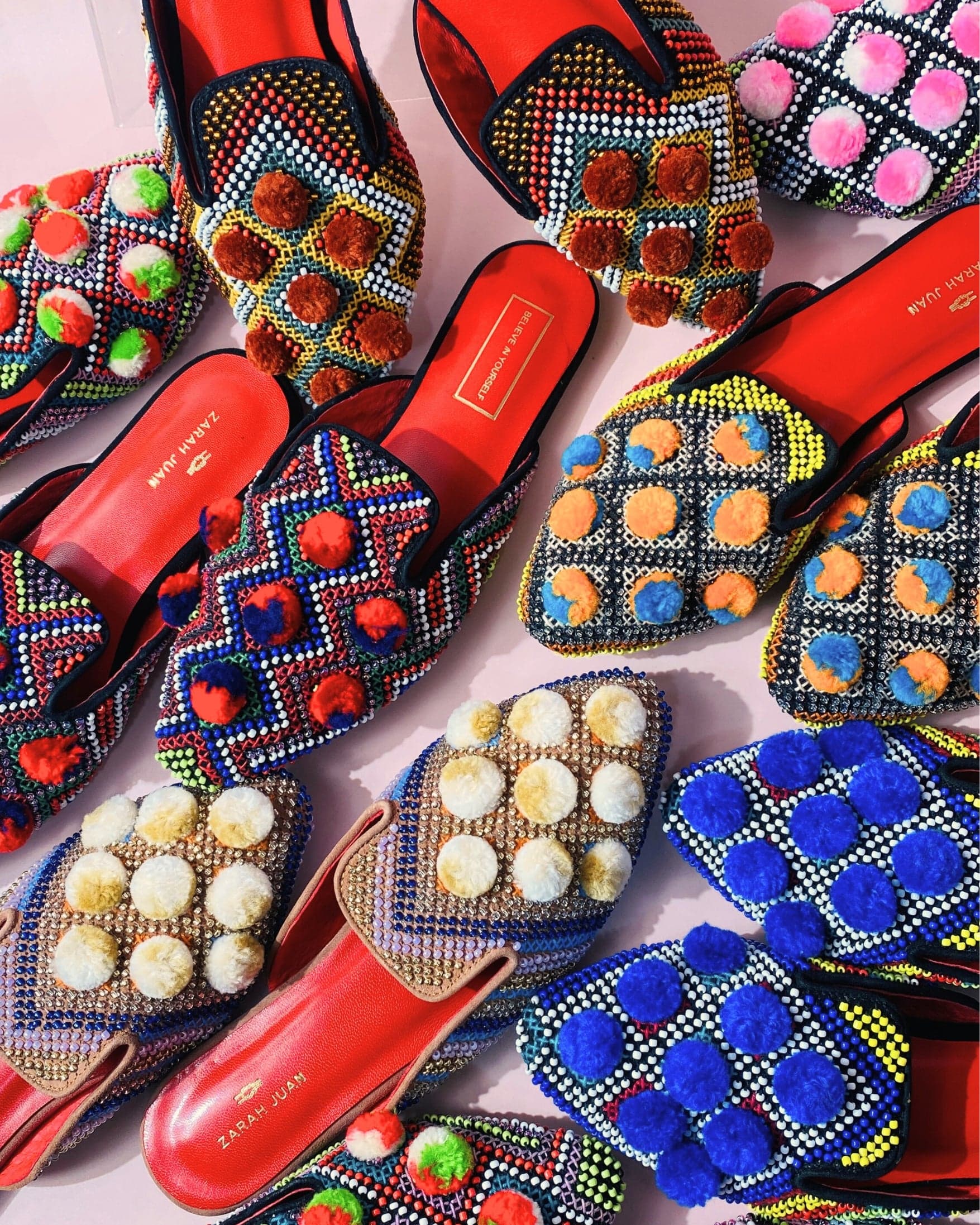
What began as Green Leaf Ecobags — a legitimate business by 2007, born in a converted garage — pivoted in 2016 into something more ambitious: a fashion brand that would bring indigenous Filipino artisans to the world stage. Zarah began partnering with communities whose craftsmanship was extraordinary but whose market reach was almost nonexistent. T'boli women from Lake Sebu, South Cotabato, renowned for their hand embroidery. Bagobo Tagabawa beadworkers from Davao, each bead placed by hand, no two pieces ever the same. Iraya Mangyan basket weavers from Puerto Galera. Master shoemakers from Marikina. Every pair of shoes, every bag — a collaboration across regions.
The brand has since been featured in Vogue Italia, Vogue Hong Kong, and Vogue Philippines. Forbes named Zarah's work "an immediate show stopper." She was named a Vital Voices Fellow in 2023 and took home the APEC Best Award for Most Innovative Business Model in 2018. The Tarp Project — bags upcycled from discarded tarpaulins by women in Tagbilaran City — added another chapter. None of it feels like a pivot. It all feels like the same instinct: see something beautiful being overlooked, and do something about it.
Why We Featured Them
What Makes Zarah Juan Different
01
No Two Pieces Are Ever Alike
Every Zarah Juan item is handcrafted by specific artisan communities — T'boli embroiderers, Bagobo Tagabawa beadworkers, Iraya Mangyan weavers. The Bagobo beadwork alone means no two pairs of shoes share the same pattern. This isn't a marketing line. It's a structural fact of how the brand is made.
02
The Communities Are the Brand
Zarah doesn't just place orders — she provides mentorship, capacity-building, and market access to indigenous artisans who would otherwise be geographically cut off from buyers. Nearly 200 T'boli women participate in the program. The brand's success is inseparable from theirs.
03
Sustainability With Receipts
The Tarp Project turns discarded tarpaulins salvaged from landfills in Bohol into bags handmade by women in Tagbilaran City. This isn't greenwashing — it's a closed loop that cleans up waste, funds livelihoods, and produces something people actually want to carry.
Ready to own
a piece?
Each collection is limited — when it's gone, it's gone.