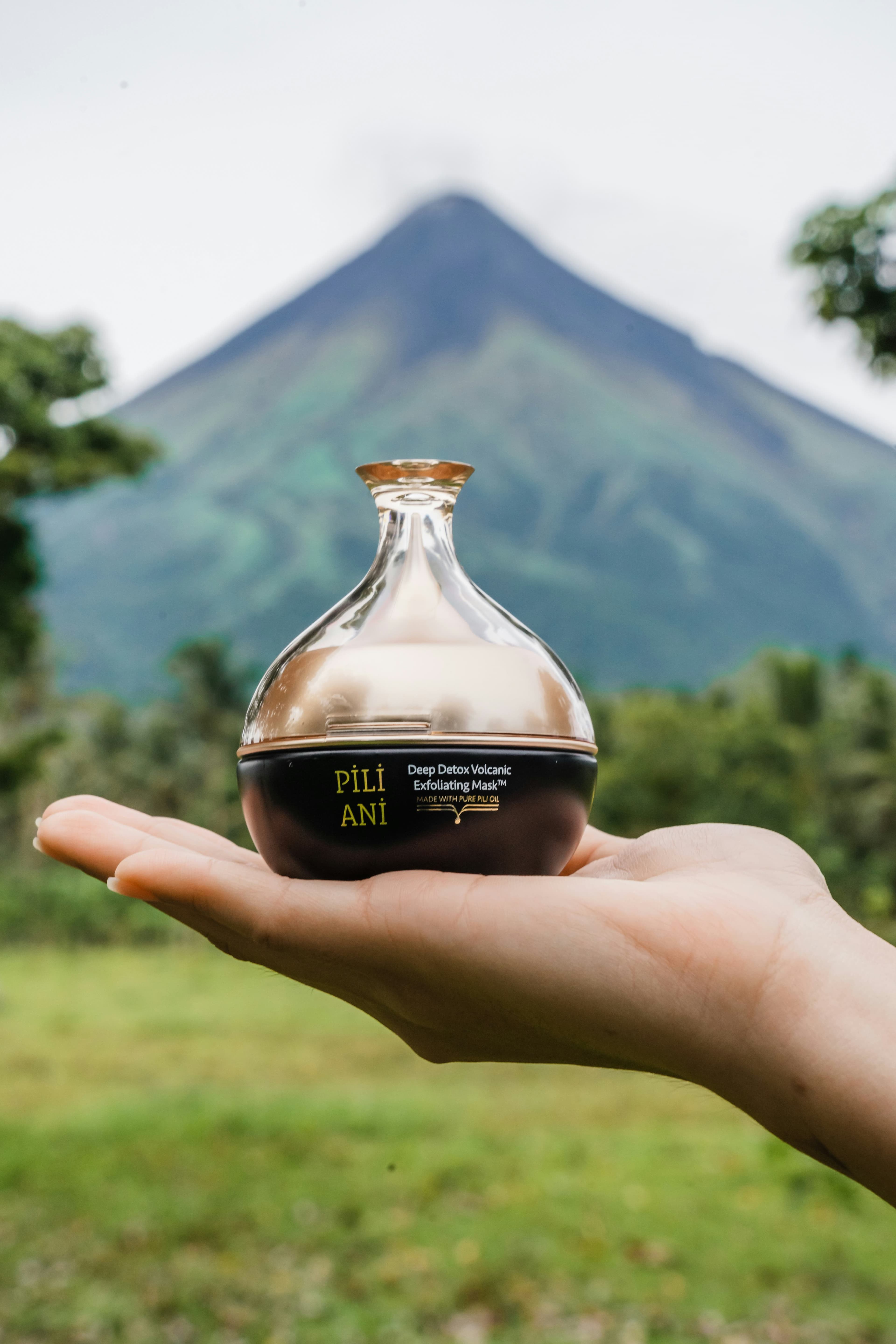
Pili Ani
The brand that started when a Filipino woman bought oil from a farmer — and ended up building a sustainable skincare company around the only tree native to the Philippines.
Shop Pili AniPili Ani is the rare beauty brand whose origin story is not a marketing exercise. Rosalina Tan didn’t set out to build a company. She bought oil from a farmer who needed to get home. What followed — the lipstick experiments, the Elemi discovery, the agricultural education program, the US launch — was the natural consequence of someone who took that first act of compassion seriously, all the way to the end. Farmer Noli still harvests for the brand.
The Founders
Rosalina Tan
Founder
Mary Jane Tan
Co-Founder
Fast Facts
It Started With a Farmer Named Noli and a Bottle of Hand-Pressed Oil.
Rosalina Tan was in Bicol when she encountered a farmer named Noli selling hand-pressed Pili Oil by the roadside. He needed money to get home. She bought the oil out of compassion, not curiosity — and then, because she was curious by nature, she took it home and started experimenting. She infused it into homemade lipsticks and shared them with friends and family. The response was immediate: people kept asking what was in them. Their skin was softer. The formula was working.
Rosalina began investigating the Pili Tree with her daughter Mary Jane. What they found was remarkable. The Pili Tree is native only to the Philippines — no other country in the world grows it. Its pulp is rich in antioxidants that support skin renewal. Its resin yields Elemi Oil, a prized ingredient that had long been used by premium French skincare houses, largely sourced without acknowledgement of its Philippine origins. Filipino farmers had been harvesting it for export. The country that grew the ingredient had never built a brand around it.
“True beauty is never just skin deep — it’s rooted in purpose, nurtured by care, and made more radiant through authenticity.”
There was another problem to solve. Unsustainable Elemi harvesting practices were threatening both the Pili Trees and the livelihoods of the farming communities that depended on them. Rosalina responded by building an agricultural education initiative in Bicol, teaching sustainable harvesting methods that protect the trees across generations. The mission statement that came out of this work is precise: “Beauty with a deeper purpose. Crafted for the community, guided by heritage.”
Pili Ani launched in the Philippines in 2016 and entered the US market in 2017, operating out of San Francisco. Farmer Noli — the man who sold Rosalina that first bottle of oil by the roadside — still harvests for the brand today.
Why We Featured Them
What Makes Pili Ani Different
01
A Bottle of Oil and an Act of Compassion
The brand’s origin isn’t a pitch. Rosalina bought Noli’s hand-pressed Pili Oil because he needed to get home. The fact that he still harvests for Pili Ani today is the entire philosophy of the company expressed in one sentence.
02
The Philippines Had a Skincare Secret
Elemi Oil, from the Pili Tree native only to the Philippines, is a prized ingredient in premium French skincare — long exported without recognition of its origins. Pili Ani reversed that equation, building both a product and a sustainable harvesting education program that protects trees and farming livelihoods.
03
Bicol to San Francisco
Pili Ani launched in the Philippines in 2016 and entered the US market in 2017. Every product connects a San Francisco bathroom shelf to a Bicol farming community, through a supply chain designed to ensure that connection is fair, traceable, and lasting.
Ready to own
a piece?
Each collection is limited — when it's gone, it's gone.